

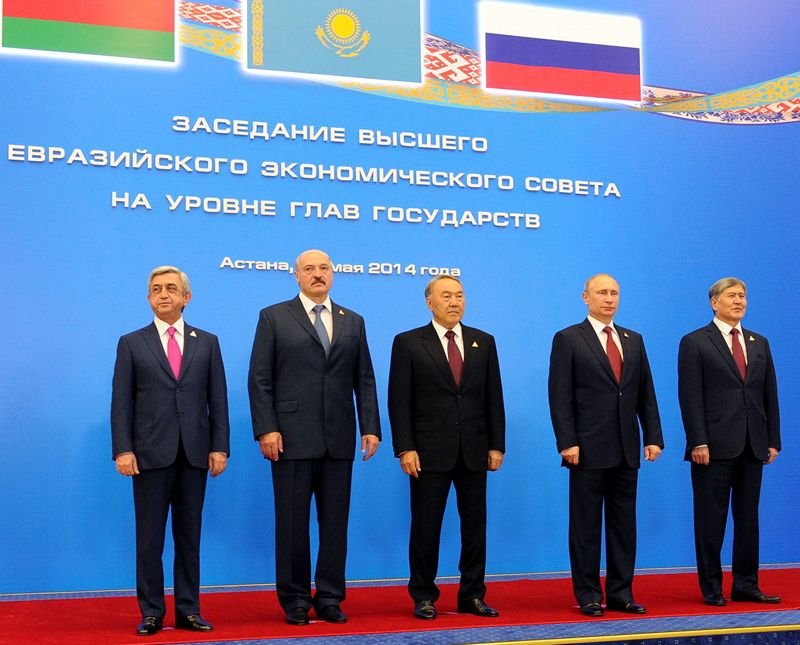
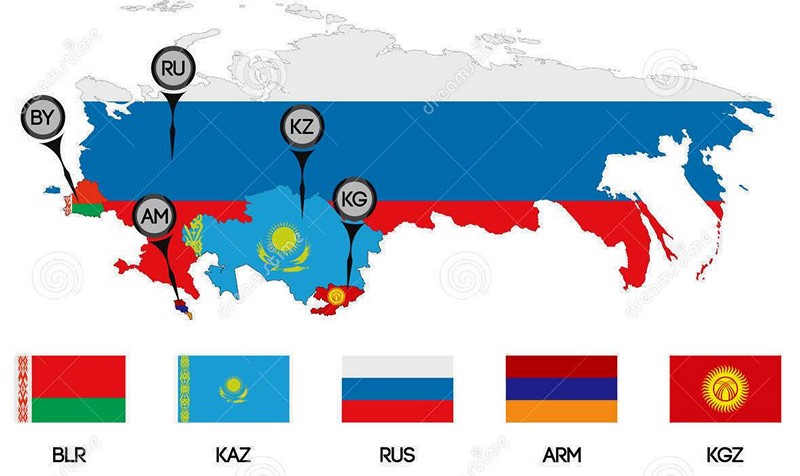
In an article for the “Investor.ge” magazine, RSC Director Richard Giragosian offered an assessment of the impact of the January 2015 move by Armenia to join the Eurasian Customs Union, with a focus on “how much the deal will benefit Armenia - and if Yerevan still has a chance to build strong relations with the EU.”
.According to Giragosian, “for Armenia, membership in the Eurasian Union was neither a natural nor a prudent decision. The September 2013 decision was largely a result of Russian pressure, and the Armenian president was compelled to sacrifice the country's Association Agreement and its related Deep and Comprehensive Free Trade Agreement (DCFTA) with the European Union (EU).”
He went on to add that “the sudden nature of the Armenian president's abrupt decision, in which the Armenian government itself was unprepared and largely unaware, was seen as both a ‘policy U-turn’ and a ‘strategic setback’ for Armenia. The Russian-dominated Eurasian Economic Union is also a contradiction in logic for Armenia, as seen in structural impediments ranging from a lack of any direct land connection or a functioning railway to the requirement of increasing Armenian tariff rates and artificially redirecting Armenia's natural trade orientation away from Western markets.”
For Giragosian, it was the “broader context” that was most significant, whereby “Russia's pressure on Armenia to join the Eurasian Union was a strategic move by Moscow with little relevance and even less regard for Yerevan. Rather, the Russian decision to coerce Armenia marked a significant reversal for Russian policy, which in the case of Armenia, had never opposed Armenia's nearly four years of negotiations with the EU over the planned Association Agreement. Moreover, the real ‘U-turn’ in policy occurred in Moscow before it did in Yerevan, and represented a newly assertive Russian move to counter deepening European engagement in the so-called ‘near abroad,’ or former Soviet space, which Moscow is now intent on defending as its own ‘sphere of influence.’
But there an element of optimism for Armenia, as the recent Riga Summit, focusing on the EU's Eastern Partnership, affirmed an important ‘second chance’ for Armenia, and paved the way for the start of a new effort to salvage a legal framework of relations between Armenia and the European Union. This second chance offers the Armenian government a chance to overcome and correct its earlier image as an insincere partner, and through a more nuanced, country-specific policy of "differentiation," allows the EU to engage each of the Eastern Partnership states on the basis of each country's unique set of limitations and objectives.
Looking ahead at the course of such a rebuilding of Armenia-EU relations, however, there is a concern over a possible renewal of Russian pressure. And in light of a resurgence of Russian power, matched by a pattern of aggression and outright war in Ukraine, the danger for Armenia stems from a return of Russian coercion aimed at impeding Armenia's future ties with the EU. Yet on an economic basis, the Eurasian Economic Union has become a very different and significantly less attractive effort than initially planned, for three main reasons. First, the "loss" of Ukraine as a key component of the Eurasian Union seriously undermines the economic viability and trade potential of this Russian project of regional (re)integration. A second factor underlying the diminished appeal of the Eurasian Union stems from the deeply negative impact of Western sanctions on the Russian economy, whereby a steep decline in the value of the Russian ruble and a steady fall in global oil prices has greatly diminished Russia's position as the economic driver of the Eurasian Union. And third, the foundation of the Eurasian Union itself is seriously limited by the reliance on pressure and coercion on members and partners, in stark contrast to the appeal and seductiveness of the EU model. These factors have also culminated in the recent trend of opposition and hesitation from both Belarus and Kazakhstan, whose leaders are much more willing to confront and challenge Russian dominance over the Eurasian Union.
Thus, the new offer of European engagement offers Armenia an essential way to escape the inherent impediments from being both dangerously over-dependent on Russia and precariously trapped within the Russian orbit. In terms of both economic reform and trade access, the natural allure of the European model and EU markets far outweighs Armenia's "comfort zone" of a limited and asymmetric reliance on the old Russian rule set of subsidized trade and submissive dependency. And due to the debilitating combination of rising costs and meager benefits offered to Armenia from the Eurasian Union, Armenia's only real hope is to leverage a new opening with the EU to counter the negative effects from the imposition of a Russian-centric artificial correction to Armenia's natural trade pattern while containing the impact of the economic contagion resulting from the downturn in the Russian economy.”