

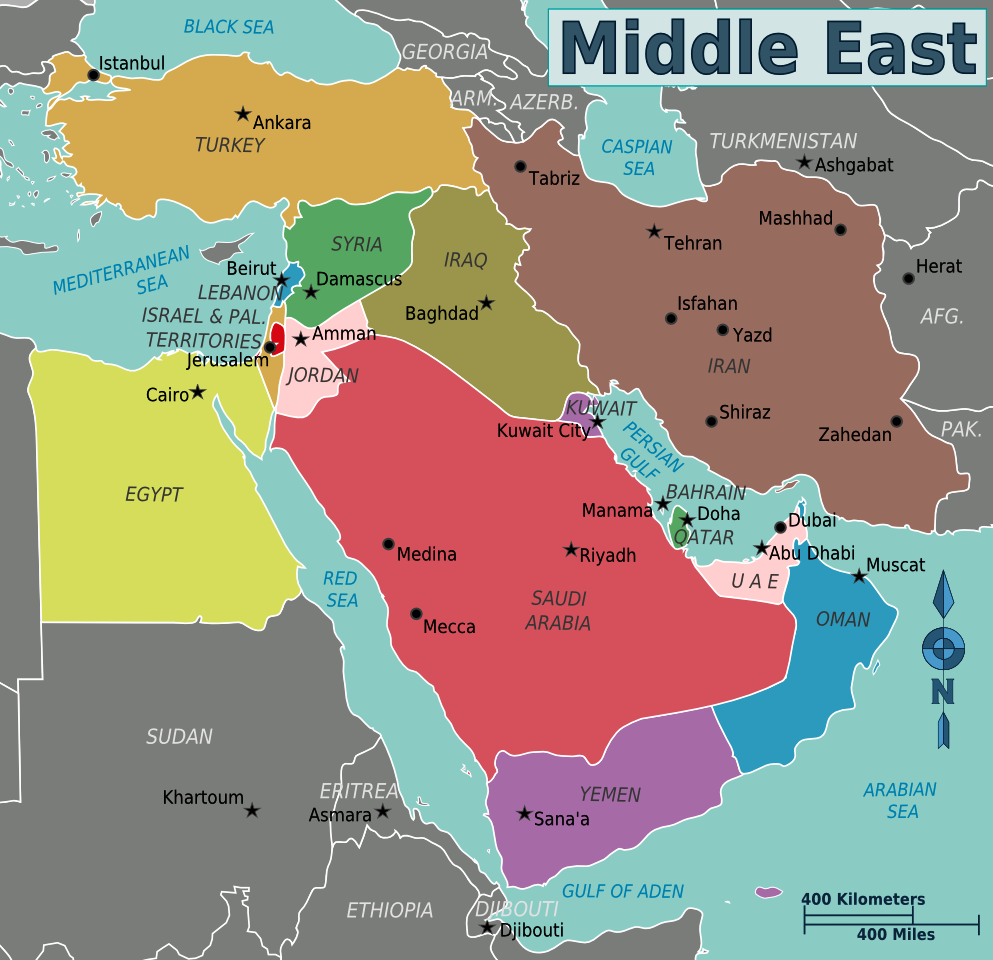
In a wide-ranging interview with the Armenian media outlet “Arminfo,” RSC Director Richard Giragosian offered an assessment of broader regional trends, including a focus on developments in the Middle East, the successful Western-brokered nuclear deal with Iran and the current “crisis of confidence” in Armenian-Russian relations.
.The following are key excerpts from the interview:
(Arminfo): The developments of the last months in the Greater Middle East have seriously changed the geopolitical map of the region, particularly, after the West started rescinding the sanctions against Iran and Turkey has got involved into the fight against the Islamic State and Kurds. Do any of these developments meet Armenia’s interests?
(RSC): Since Turkey is in quite unfortunate position in the above processes and is experiencing serious problems in relations with both the Kurds and the West, in general, Armenia’s position in the world is much more favorable and stronger now. The point is that Armenia is, perhaps, the most stable country in the region. The ongoing development of relations with Iran is a very important geopolitical factor for Armenia in this very context, since Armenia is the only stable country neighboring Iran. In this light, Armenia and to a lesser degree, together with the Armenian Diaspora in Iran, has all the chances to become a bridge linking the post-sanction Iran with the world. Some negative processes come from Russia, as that country is not interested in the full development of the Armenian-Iranian relations and seriously impedes that process.
(Arminfo): What does make Armenia stable and comparing to which countries?
(RSC): Just have a look at the geography, and the countries in the region. As domestic policy in Turkey is extremely uncertain, that country is in complete chaos now. Azerbaijan is rapidly turning into a model of dictatorship that can be compared, perhaps, with the North Korean model. Iran is gradually getting out of the sanctions and seeks rapprochement with the West. The continuous sanctions and the conflict with Ukraine have seriously weakened Russia and the country is gradually losing its domestic stability too. Georgia is hindered by its own destructive “vendetta politics.” And further south, statehood in Syria is on the verge of collapse, while a disintegration processes has only intensified in Iraq. Therefore, both geographically and geo-politically, Armenia appears to be the most stable country in the region. I can’t help but notice that it is a development that does not result from the credit of the Armenian authorities and their policies, however. It has become possible amid more serious and global problems within Armenia’s neighbor-countries.
(Arminfo): Well, the super powers, including the regional ones, still have interests in the South Caucasus…
(RSC): In fact, the interests of the United States or Turkey in the South Caucasus pale in significance compared to the more global problems of the region. For the time being, even the European Union displays more interest in our region than the United States. Washington considers its relations with the three recognized countries of the South Caucasus in the context of and as a “subset” of its relations with Russia, first of all. Meanwhile, Turkey needs new foreign policy priorities rather than the development of its relations with Georgia and Azerbaijan, and its policy of exclusion toward Armenia has not worked, rather, it is a “failed policy.” In fact, the interests of Washington and Ankara in the South Caucasus resemble more global problems.
(Arminfo): Do you mean that the Islamic State is behind those global problems?
(RSC): It must be acknowledged that the terrorist assaults and the barbaric activity of the Islamic State in Syria have extremely affected the local Armenians. Yet, the Islamic State constitutes no direct threat to Armenia as a country. Armenia has no borders with the territories under control of the IS. The closed borders with Turkey and Azerbaijan make the threat of terrorist assaults even more obscure. This is exactly why Armenia avoided the actions of al Qaeda, which like the IS opposed the Christian countries, and will avoid the activity of the PKK militants too.
(Arminfo): The gradual lifting of the sanctions against Iran has already led to some positive developments in the Armenian-Iranian relations. Imagine that Armenia may turn into a country transiting the Iranian oil and gas and linking that country with Europe.
(RSC): Energy is, perhaps, the weakest thread linking Armenia and Iran. Any efforts to increase the capacity of the Armenia-Iran gas pipeline, for example, will trigger Russian opposition. Competition is not within the interests of either Gazprom or Russia’s foreign policy, which may be called a policy of gas blackmail. Therefore, Russia will continue using energy as a mechanism to keep Armenia extremely dependent on Russian gas imports. In addition, the improvement of Iran’s relations with the West has resulted in two obvious casualties: Israeli leader Netanyahu and Russian President Putin. Moscow will become less important for Iran after Tehran restores its ties with European countries. To date, Russia has been important for Iran as an alternative to the West and a source of assistance in overcoming the consequences of the West’s sanctions. In this light, the main areas of the deepening of Armenian-Iranian relations will be in the sectors of transport, communications, and trade. I think these areas are no less important than the energy field, considering that many European companies seek to enter the Iranian market that had been closed for them for a long period of time. To that end, these companies are very likely to use the Armenian infrastructure and labor force as a “platform” or “bridge” to commercially engage and enter the Iranian market.
(Arminfo): Will this affect Ilham Aliyev and Azerbaijan’s oil curse?
(RSC): No, not for the president of Azerbaijan. However, it will affect the Iranian-Azerbaijani relations implicitly. In particular, I anticipate a new round of border disputes and an escalation of the latent tension between Baku and Tehran. Although Azerbaijan is a secular state, it is a Shiite country at the same time, and Tehran will exert more efforts to increase its influence in terms of Iran’s strategic aim to maintain its role as the world’s primary Shiite “spokes-state.”
(Arminfo): Does it mean that you anticipate no transit corridor linking Russia and Iran via Armenia?
(RSC): No, since it is a very big problem. After the August War with Georgia, Russia cannot even ensure permanent overland connection with its own military base in Gyumri. Armenia is considered as ‘an island’ even in the plans and projects of the Eurasian integration.
(Arminfo): They say Russia supplies its 102nd military base in Gyumri via the territory of Turkey…
(RSC): Actually, during the period of the Armenia-Turkey Zurich protocols, Moscow tried to reach an agreement with Ankara concerning airspace access to reach its military base in Armenia via the territory of Turkey. However, the negotiations failed, as NATO’s interests have eventually dominated over the other issues. This is exactly why Moscow agreed with normalization of the Armenian-Turkish relations. This issue is still a big problem for Russia, considering that it supplies the 102nd military base by air via the Caspian Sea and Iran, which is very costly and not that reliable.
(Arminfo): Many journalists and analysts say Moscow is behind the escalation of tension on the Line of Contact in the Karabakh conflict zone and on the Armenian-Azerbaijani border that results in more and more casualties. They say Russia thereby tries not to lose another lever of influence on the conflicting parties. What do you think about it?
(RSC): It is not an opinion, but a real fact. The Karabakh conflict is an ideal tool to maintain Russia’s influence in Armenia and Azerbaijan. I cannot but mention that the Defense Army of Karabakh and Armenia’s armed forces are not managed by Moscow. There is real “complementarity” in both the security and defense fields and the current balance is based on that “complementarity.” As for Azerbaijan, it escalates the tension on the border on its own, so Russia does not need to exert any efforts for that. What Russia needs to do is to remain the number one arms supplier for both Azerbaijan and Armenia. The unsettled conflict and the status quo perfectly fit into this logic. If Moscow demands that its peacekeepers are deployed around Karabakh, more risks and challenges will emerge. This will affect the security of both Karabakh and Armenia.
http://arminfo.am/index.cfm?objectid=944CE100-4598-11E5-A55C0EB7C0D21663
For the Armenian version, see: http://arminfo.am/index.cfm?objectid=B0B77560-450E-11E5-87D10EB7C0D21663
For the Russian version, go to: http://arminfo.am/index.cfm?objectid=9E90D490-44D6-11E5-87D10EB7C0D21663