
In comments for Radio Free Europe/Radio Liberty’s (RFE/RL) Armenian Service on 1 August, RSC Director Richard Giragosian offered his analysis of the coming presidential election in Turkey, with a focus on the implications for Armenia.
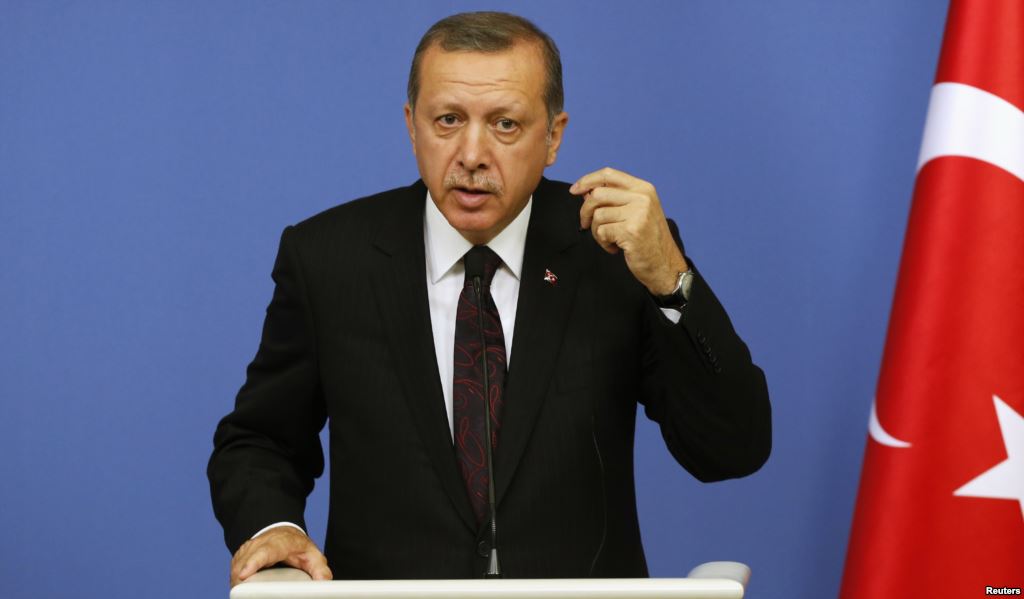
.According to Giragosian, current Turkish Prime Minister Recep Tayyip Erdoğan is “clearly intent on being elected as a new, more powerful president. And as much as the constitutional changes are important for Turkey as a state, the changes were also about Prime Minister Tayyip Erdoğan personally.”
“In this context,” he continued, “if the prime minister is elected as the country’s next president, as now seems certain, it is no longer about the ruling Justice and Development Party (AK Party). Rather, it will be a new stage of Turkish politics, defined by a newly enhanced and more powerful president, similar to an Ataturk model of power, with Erdoğan serving as Turkey’s next president with a dangerous degree of power. And that danger stems from his campaign against any and all political opponents, including within the military and within the police, as well as against his political rivals. And the lack of any true checks and balances against him is a danger for Turkey. And this danger is rooted in his potent personal, and not simply political, power.”
He went on to add that “the real surprise from a possible Erdoğan presidency is just that—surprise. He has already adopted a softer, more statesmanlike political posture. And with the Kurdish initiative and other policy moves, one can only expect more surprises from Erdoğan. Moreover, for many Armenians, there are two specific concerns or worries over these recent developments in Turkish politics. For one, the rapid rise of Prime Minister Erdoğan as the most powerful politician and the leading candidate to be elected as Turkey’s next president is a cause for concern, for several factors.
First, the fact that the prime minister, as a dynamic political figure, tends to be both popular and polarizing, is often using extremely aggressive and bellicose language when referring to the Armenians or the Armenian issue. Although of course his rhetoric and aggressive remarks are not limited to only the Armenians, and have been used in many earlier diatribes against the Israelis and the West, for some examples, he is perceived as a pronounced ally of Azerbaijan and foe of the Armenians, even despite his 23 April 2014 statement (on the Armenian genocide).
Second, his rapid rise and his rather authoritarian reputation worries Armenia, in terms of a rather unpredictable and inflexible approach toward Turkish foreign policy. And in a related sense, the third concern over the prime minister’s future stems from concerns that he will have and hold too much personal and political power, without due deference to the rule of law or democratic institutions within Turkey. In this way, many in Armenia worry about the future of Turkey itself.
At the same time, many in Armenia are also concerned over more than the rise of Erdogan. Rather, they are concerned over the demise and decline of President Gul. After all, it was President Gul that made history as the first Turkish head of state to visit Armenia. And with hopes for normalization having rested on President Gul’s shoulders, his apparent political decline has meant that Armenia has lost a “partner for peace” and a more worthy and more sincere interlocutor for building a new relationship. Thus, as usual, Armenia is concerned over developments in Turkey and the future of Armenian-Turkish normalization is ever more hostage to the outcome of domestic Turkish politics.
He then noted that “with a divided and divided opposition in Turkey, Prime Minister Recep Tayyip Erdoğan remains without any real challenge, and as the official candidate of the ruling Justice and Development Party, Turkey seems set for another period of one-party rule, which will only further hinder and harm democratization.”