Would you like to make a difference in Armenia?
Consider supporting our work to deepen democracy, strengthen statecraft and defend the Armenian national interest.
As Armenia faces an unprecedented combination of threats and challenges, we each have a part to play in helping the Armenian nation. But after standing on the frontline committed to the defense and development of Armenia for over twelve years, our think tank, the Regional Studies Center (RSC), is now asking for your support.
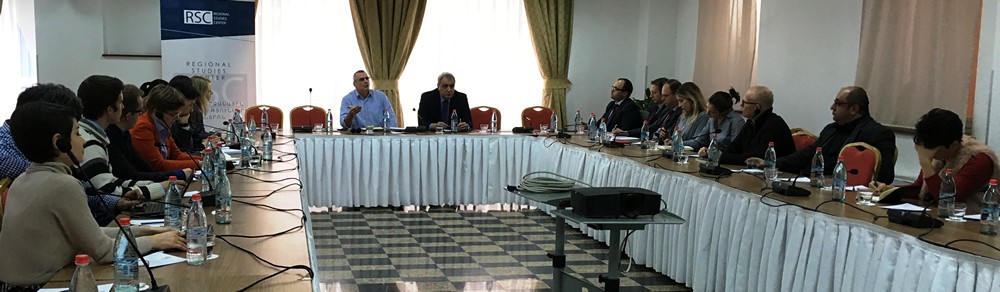
As a think tank in Armenia, we focus on contributing to Armenia’s public policy process by providing analytical support in the areas of foreign policy, national security, defense reform and diplomatic strategy. We further seek to strengthen statehood and support statecraft by engaging with Armenian state institutions, including ministries and parliament.
Our work also consists of an advocacy campaign to articulate the Armenian perspective among the diplomatic community and international organizations. And we are proud to have garnered a prominent reputation as a leading Armenian source for interviews and comments for a wide range of American and European media outlets.
Yet one of our most important efforts involves our investment in youth and young professionals in Armenia. Our youth programs comprise a series of educational training courses devoted to professional development and capacity-building, and designed to educate, empower and enhance Armenia’s gifted and promising next generation.
But to sustain and expand our work in this time of crisis for Armenia, we are now asking for your financial support. Your generous contribution and support are greatly appreciated, and we welcome donations in any amount, in USD or EUR (banking details attached).
Thank you,
Richard Giragosian
Director, Regional Studies Center (RSC)